
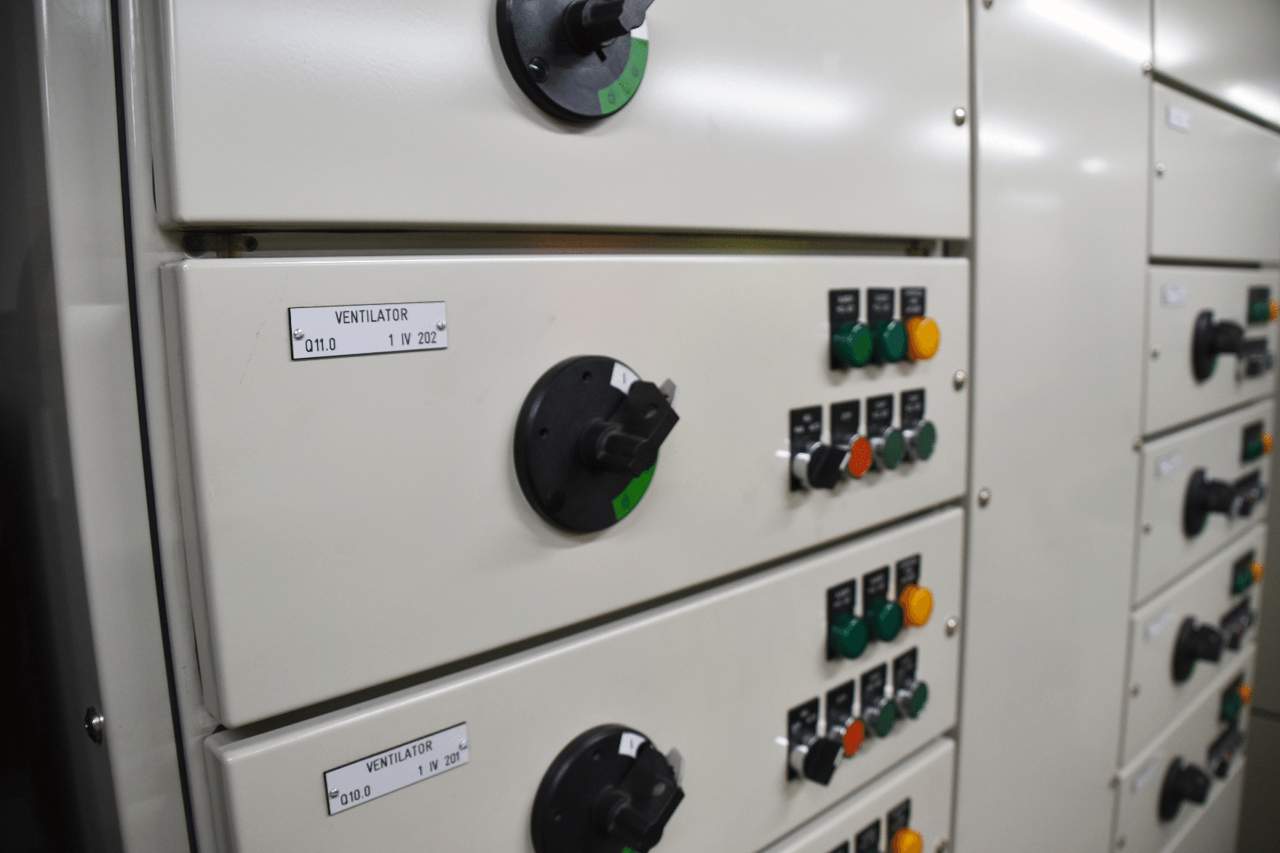
Safety and operational continuity in low-voltage switchgear are not limited to selecting the correct switching devices or providing adequate busbar capacity. The way busbars, functional units and connection areas are arranged and separated within the assembly is also an important design consideration for maintenance, access and operation.
The internal separation approach addressed within the IEC 61439 series allows different functions inside low-voltage switchgear assemblies to be separated in a controlled manner. Depending on the application and project requirements, different forms of internal separation from Form 1 to Form 4B may be specified.
Logstrup Modular System enables switchgear configurations from Form 1 to Form 4B to be created using steel separation within the IEC 61439-1/2 framework.
Why are IEC 61439-1 and IEC 61439-2 important?
IEC 61439-1 defines the general rules, service conditions, constructional requirements, technical characteristics and verification requirements for low-voltage switchgear and controlgear assemblies. IEC 61439-2 is the product standard for power switchgear and controlgear assemblies and is applied together with these general rules.
Accordingly, a low-voltage switchgear assembly cannot be assessed solely by the ratings of the circuit breakers or other switching devices used. Electrical performance, temperature rise, short-circuit withstand, mechanical construction, protection, connections and design verification must be considered together as part of the complete assembly.
This is where the IEC 61439 approach becomes particularly important: the design and verification integrity of the complete assembly matters, rather than the characteristics of individual components alone.
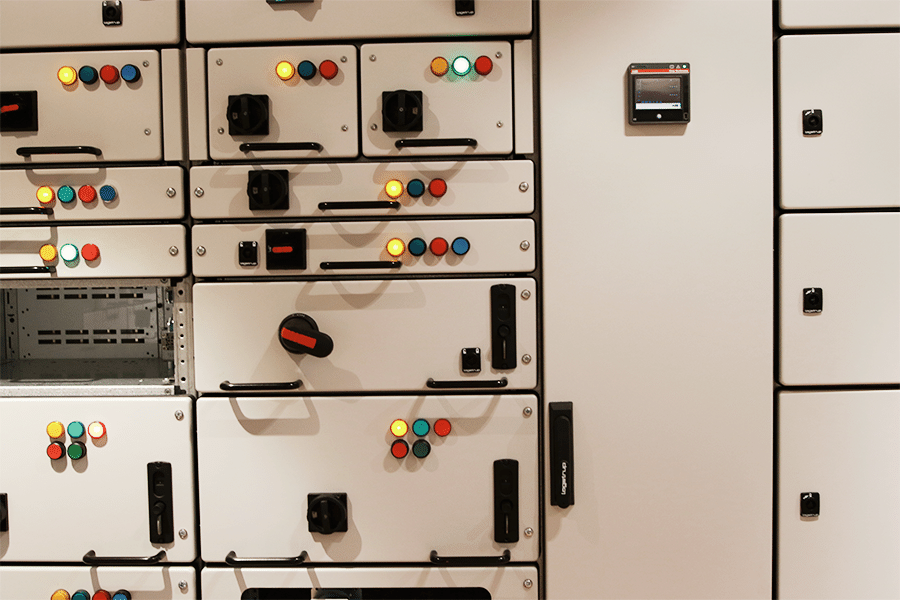
What is internal separation in low-voltage switchgear?
Internal separation is the separation of busbars, functional units and connection areas within a switchgear assembly by means of suitable barriers or partitions.
IEC 61439-2 also addresses requirements relating to forms of internal separation. In assemblies above Form 1, protection against contact with parts that may remain live within a functional-unit compartment when the unit is switched off is one of the considerations addressed by the standard.
Appropriate internal separation can support:
- limiting the risk of direct contact with hazardous areas during maintenance or access,
- separating functional units from one another,
- providing a more controlled arrangement of busbars and connection areas,
- making the area to be maintained easier to identify,
- supporting more structured operation and service work.
The required form of separation is not necessarily the same for every project. Operating philosophy, maintenance strategy, switchgear type and project specification should be evaluated together.
What changes from Form 1 to Form 4B?
As the form of separation increases, the physical separation between the main functions within the assembly becomes more comprehensive.
Form 1 represents the most basic arrangement, while the higher forms introduce more extensive separation between busbars, functional units and connection areas.
Form 4B is one of the options considered where a high level of internal separation is required.
Logstrup Modular System supports different switchgear configurations from Form 1 to Form 4B using steel partitions.
Key Benefits of Form 4B Internal Separation in LV Switchgear
A key advantage of Form 4B is the ability to provide a more clearly defined separation between different electrical functions within the assembly.
For example, in an MCC or PCC assembly, separating the busbar system, functional units and connection areas into controlled compartments can help define the area in which maintenance work is carried out and support more controlled access to different sections.
This approach is particularly relevant in projects where maintainability, controlled access, separation of functional sections, cable and connection organisation, and support for operational reliability are important.
Difference Between Form 4B Internal Separation and Internal Arc Performance
No. These are not the same concept.
Form 4B describes the internal separation arrangement of different functions and connection areas within the switchgear assembly.
The ability of an assembly to limit risk to personnel during an internal arc fault, restrict resulting damage or improve power availability after the event is a separate verification topic.
IEC TS 61641:2026, published in 2026, separately addresses verification methods relating to internal arc faults in low-voltage switchgear and controlgear assemblies complying with the IEC 61439 series.
| Feature | Form 4B Internal Separation | Internal Arc Performance |
|---|---|---|
| Primary purpose | Separation of busbars, functional units and connection areas. | Verification of assembly behaviour during an internal arc fault. |
| Reference | IEC 61439-1/2 | IEC TS 61641:2026 |
| Main focus | Controlled separation, access and maintainability. | Personnel risk, damage limitation and post-fault power availability. |
| Verification | Internal separation arrangement of the assembly. | Separate internal arc-fault verification. |
| Relationship | Does not by itself demonstrate internal arc performance. | Must be specified and verified separately when required. |
Logstrup Modular System and Form 4B
Logstrup Modular System is based on a 190 mm modular framework.
According to Logstrup’s official technical information, the frame profile is manufactured from 2 mm steel with a five-fold construction. The Aluzinc-coated framework is also designed to provide high resistance to rust and corrosion.
Steel separation can be used within the system to achieve Form 1–4B internal separation under IEC 61439-1/2.
Depending on project requirements, the same modular platform can be configured for:
- main and sub-distribution switchboards,
- PCC applications,
- MCC switchboards,
- fixed functional units,
- plug-in solutions,
- withdrawable functional units.
These configurations can be developed within the same modular system platform.
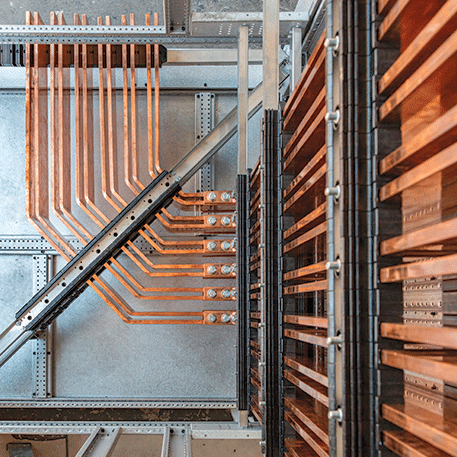
Specification Checklist: Is Form 4B Required for Your Project?
No. A higher form of separation does not automatically mean that it is the right solution for every project.
When determining the required level of internal separation, the actual operating and maintenance conditions of the switchgear should be considered. At the beginning of a project, the following questions are particularly useful:
- What maintenance activities will be carried out on the switchgear?
- Which sections must remain accessible during maintenance?
- How critical is operational continuity?
- Will fixed, plug-in or withdrawable functional units be used?
- Which form of internal separation is required by the project specification?
- How will cable entries and connection areas be arranged?
- What will the main and distribution busbar architecture be?
- Is separate verification for internal arc performance required?
These questions help determine not only the appropriate form of separation, but also the overall switchgear architecture.
Conclusion
Within the IEC 61439 framework, internal separation is more than a mechanical detail in low-voltage switchgear design.
When appropriately specified and designed, it becomes an important part of the switchgear architecture in terms of maintainability, controlled access, functional separation and operational reliability.
Form 4B is a strong design option for projects requiring a high level of internal separation. However, Form 4B and internal arc performance are not the same concept; where internal arc performance is required, it should be assessed separately against the relevant verification criteria.
With Form 1–4B internal separation, different functional-unit arrangements and a modular mechanical platform, Logstrup Modular System can be configured to suit the technical and operational requirements of MCC and power-distribution projects.
Let’s evaluate Form 4B and the modular switchgear architecture for your project.
For Form 4B, busbar capacity or fixed / plug-in / withdrawable switchgear architecture, you can contact the Panel Elektro engineering team for a project-based technical evaluation.
Technical sources
The technical framework of this article is based on official IEC standard pages, Logstrup’s official technical information and PANEL’s own corporate sources.